
Our Farms
Norfolk Seaweed is a company created by people who come from and live in North Norfolk, with a family background in growing and selling oysters and mussels. Our pilot farm produces sustainable, ethical seaweed used primarily in bio-fertilisers, but potentially for bioplastics, nutraceuticals and much more...
Our initial farm comprises a 5ha pilot project, which will grow to 25ha, with careful environmental monitoring at each stage of the project. The farm aids regeneration both off and onshore in our region. Seaweed farming does not need land, pesticide, fertilisers, or freshwater to grow – it has zero inputs and does not produce waste.
We're not just farming seaweed to restore the health of our seas. By the end of 2026, we aim to have settled 4 million baby oysters under the sea farm on specially designed clay bricks, which will be left in place to restore the lost reef. Oysters are one of nature’s most powerful engineers. A single oyster can filter up to 200 litres of water per day, removing pollutants and excess nutrients. Oysters also create complex reef structures that provide shelter for hundreds of marine species, stabilise coastlines, and clean the water.


Our Vision

To create a regenerative, sustainable, scalable blue economy business, providing local employment opportunities and local economic growth.
Develop products that are good for the environment, healthy, profitable, and work towards the mitigation of climate change.
Sustainable seaweed for eco-friendly products. Native oysters for thriving marine restoration. Cleaning our oceans by restoring reefs.
Helping the Norfolk economy
There are incredible benefits in seaweed farming for creating high-value and local jobs, helping our coast diversify in the face of climate change. Norfolk Seaweed has extensive experience of the licensing process in the UK and will use that experience to share knowledge with others and create new income and opportunities in the sector.
Initially we will provide dried seaweed weight to local biofertilizer, nutraceutical and bioplastic manufacturers, growing into our own primary manufacturing through a dedicated production facility, and in time, a biorefinery. There is huge potential in many markets - new products and uses for seaweed are being discovered every day.


Benefits to marine life
Offshore, the seaweed farm will help to improve ocean health: reducing nitrogen, creating better water quality by reducing acidification and increasing marine biodiversity. It will provide foraging, shelter & nursery grounds for a whole range of fish, shellfish & invertebrates, acting as a mini-Marine Protected Area.
We are setting up networks to work closely with local academics, conservationists and community groups to monitor and collect data on the regenerative and positive effects of offshore seaweed cultivation, providing essential data-driven research.

Benefits to agriculture
On land, a primary goal for Norfolk Seaweed is to create a circular economy in our region, returning nutrients to the degraded agricultural land in the region through locally produced bio-fertilizer, improving the quality of our soil and of our rivers.
One of the oldest uses of seaweed is in agriculture. Seaweed supplies macro- and micronutrients has liming properties, increases phosphorus availability, the phycocolloids improve soil structure, increases the water retention and cation-exchange capacities of soil, binds metals, boosts biological activity, and improves plant resistance to aggressive biotic and abiotic agents. These properties improve soil quality and allow seaweed to be used on any type of crop, whether organic or otherwise.


Combating climate change
On its own in the sea, seaweed is a huge contributor to combating climate change. By absorbing carbon emissions via photosynthesis phytoplankton and seaweed globally produce more than 50% of the earth’s oxygen.
Seaweed farms reduce ocean acidification by the fact that seaweed absorbs C02 from the seawater when they photosynthesize, which raises the pH to higher (less acidic) levels.
Seaweed soil improvers reduce use of nitrogen and phosphate fertilisers, reducing the carbon footprint of our farm partners.
We've farmed oysters for many years, so combining seaweed with our traditional seafood business was a natural evolution.
We're developing new products, doing our bit for sustainability and providing opportunities for much-needed employment in Norfolk.
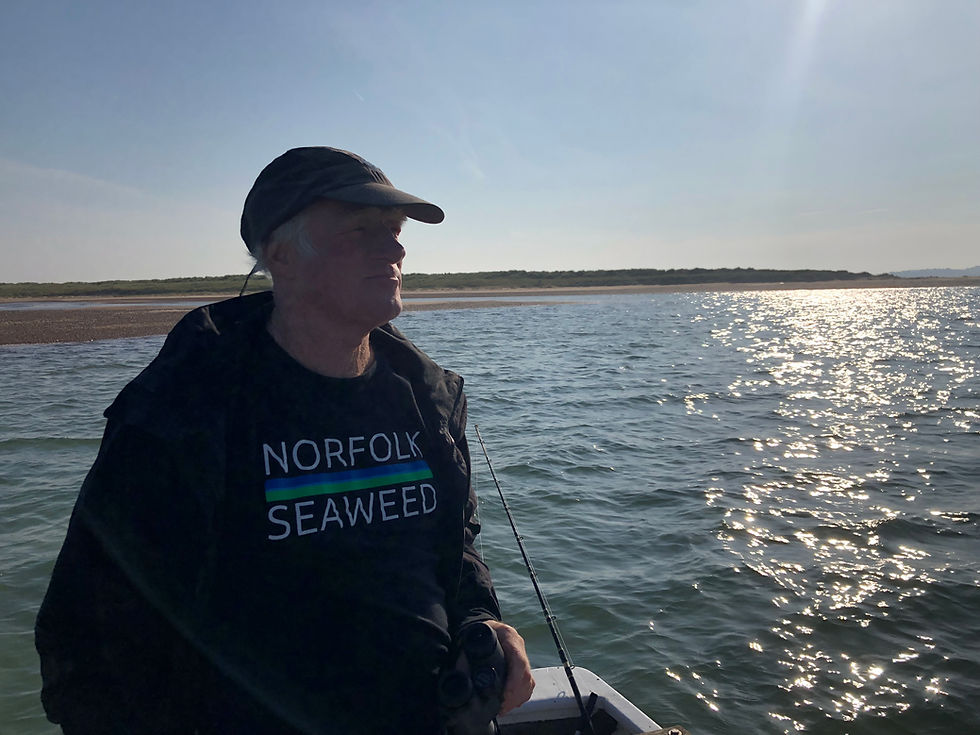
Willie Athill, Norfolk Seaweed

Our Collaborators
We are grateful to our collaborators and sponsors.


